
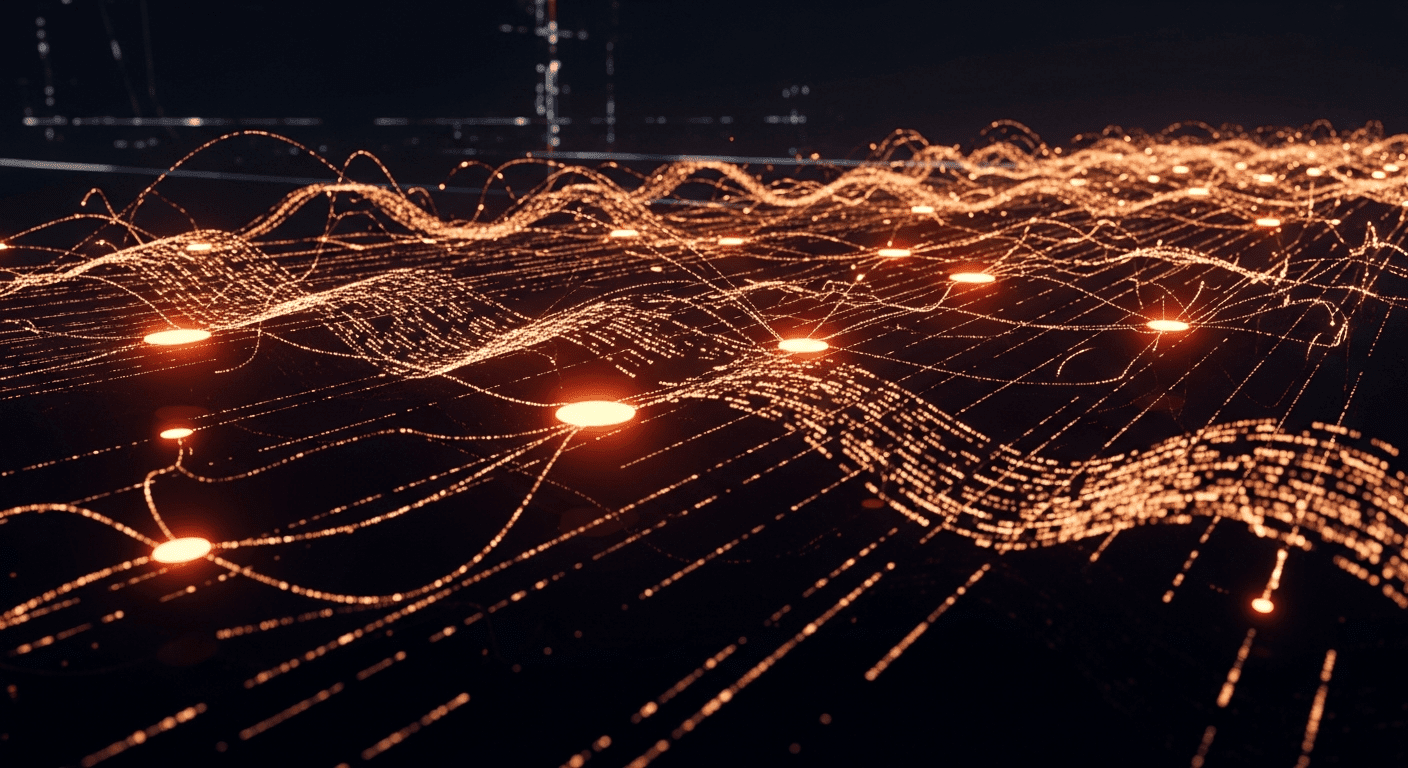
For years, digital design was bound by the physical limitations of early screens. We simulated depth through drop shadows and bevels, but the interface remained fundamentally flat. Today, advances in rendering engines and mixed-reality hardware allow us to treat the interface as a physical environment.
Spatial UI isn’t just about making things look “cool”; it’s about utilizing our innate human ability to process spatial relationships. We remember where things are in physical space much better than we remember nested folder structures.
In a spatial UI, lighting replaces traditional borders and backgrounds. By using subtle rim lights, ambient occlusion, and dynamic shadows, we can establish hierarchy without cluttering the screen with structural lines.
Consider the difference between a dark grey rectangle and a glass-like pane that subtly refracts the environment behind it. The latter provides context, feeling grounded in a space rather than floating aimlessly. This tactile quality builds trust and makes the software feel premium and intentional.
“We are moving from designing screens to orchestrating environments. The interface is no longer a barrier; it is the space itself.”
Clicking and tapping are binary inputs. Spatial interfaces introduce continuous interactions: gazing, pinching, pulling, and leaning. This requires a fundamental rethink of hover states and active states.
At Axiom Studio, we’ve begun incorporating subtle z-axis movements even in traditional web applications. A button shouldn’t just change color; it should react to the user’s cursor as a physical object would react to pressure or magnetic pull.